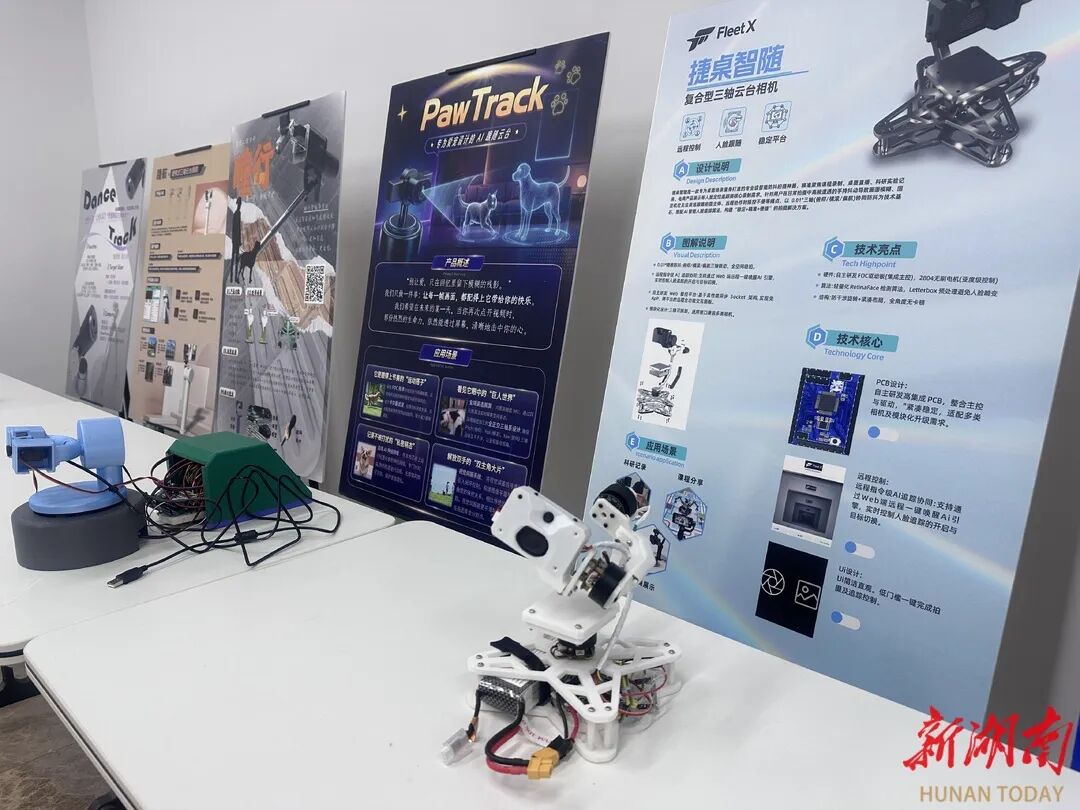
A hexapod robot can greet people and change colors; an intelligent electronic scale can automatically count a handful of screws; a tactile stick and a pair of navigation glasses … These amazing devices are on display at the entrepreneurship projects and teaching achievement exhibition of the Xiangjiang College of Elite Engineers (HNU).
All exhibits were developed by students as their coursework, respectively for the project-based courses Design and Nature for first-year students, and Quantitative Engineering Analysis andCircuit Electronics for second-year students. These ingenious works showcase how students transform their engineering knowledge into practical products under the project-based teaching model.
Project-based course: upgrading from "free creation" to "targeted breakthrough "
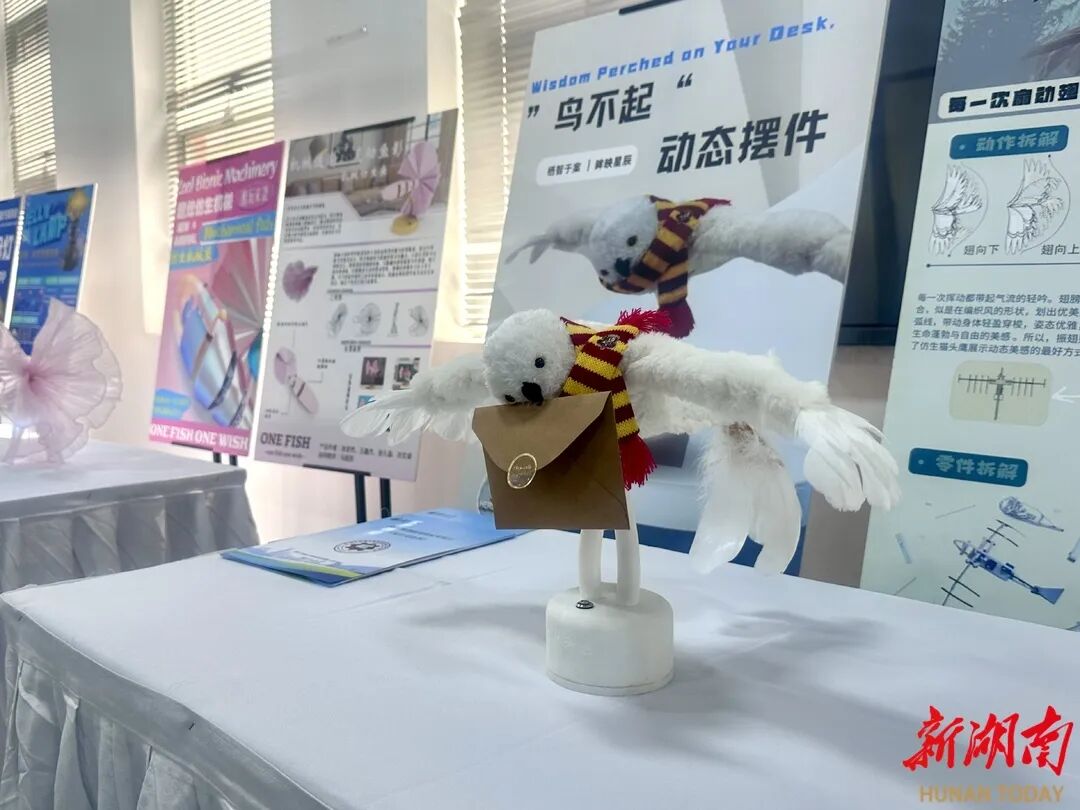
"We had an open topic when the course was first offered last year – choose an animal, use mechanical structures to create a biomimetic design, and think about what real-world problems it could solve," recalled Ma Chaomin, teacher of the Design and Nature course. Thus, a "mantis arm" that can crack walnuts, an octopus-shaped piggy bank that can guard its "treasure," and a "Hedwig" bird-shaped ornament with flapping wings were created. However, how to evaluate these creative works?
This year, the course structure has changed. Thirty-five students in the class were divided into seven groups, all engaging in creation based on a unified "hexapod robot." "We will comprehensively evaluate their works across multiple aspects of the hexapod robot, including biomimetic design, motion control, functional expansion, and overall image design," said Ma Chaomin. "With a focused goal, the evaluation system becomes clearer," he added.
An evaluation system featuring "equal priority to process and outcomes"has been established for second-year students, said Qin Yunchuan, a faculty member at the college. Based on this system, process-oriented assessments such as project progress, phased reports, and teamwork account for 50% of the final grades, while outcome-oriented assessments such as project roadshows and final exams account for the remaining 50%. During the road shows, a "public review panel" composed of entrepreneurs and investors outside the campus provides feedback from multiple dimensions such as market potential and user value, serving as a complement to the technical judges. Additionally, team members are required to conduct mutual evaluations to assess each other's collaboration and contributions.
"This helps students understand that good technologies must be combined with a useful products and practical user needs,"Qin said.
Project-based course: upgrading from "free creation" to "targeted breakthrough "
Project-based courses bring students not only improvements in knowledge and technical skills, but also raise the bar for teamwork and the ability to identify user needs.
Qin Yizhou, a second-year student, is proud of his growth compared to his freshman year. In his first-year engineering principles course, the drone he designed crashed multiple times—even falling into a river—ultimately failing to complete a two-minute flight mission.
"I was a little bit overconfident at that time, preferring working alone instead of joining team discussions." That failure became a valuable lesson. Entering his second year, he actively engaged with his teammates, proactively seeking advice from others on technical challenges with greater teamwork awareness. In two project-based courses he took, both projects he participated in received the "Best Engineering Award," and he was honored as "Outstanding Individual."
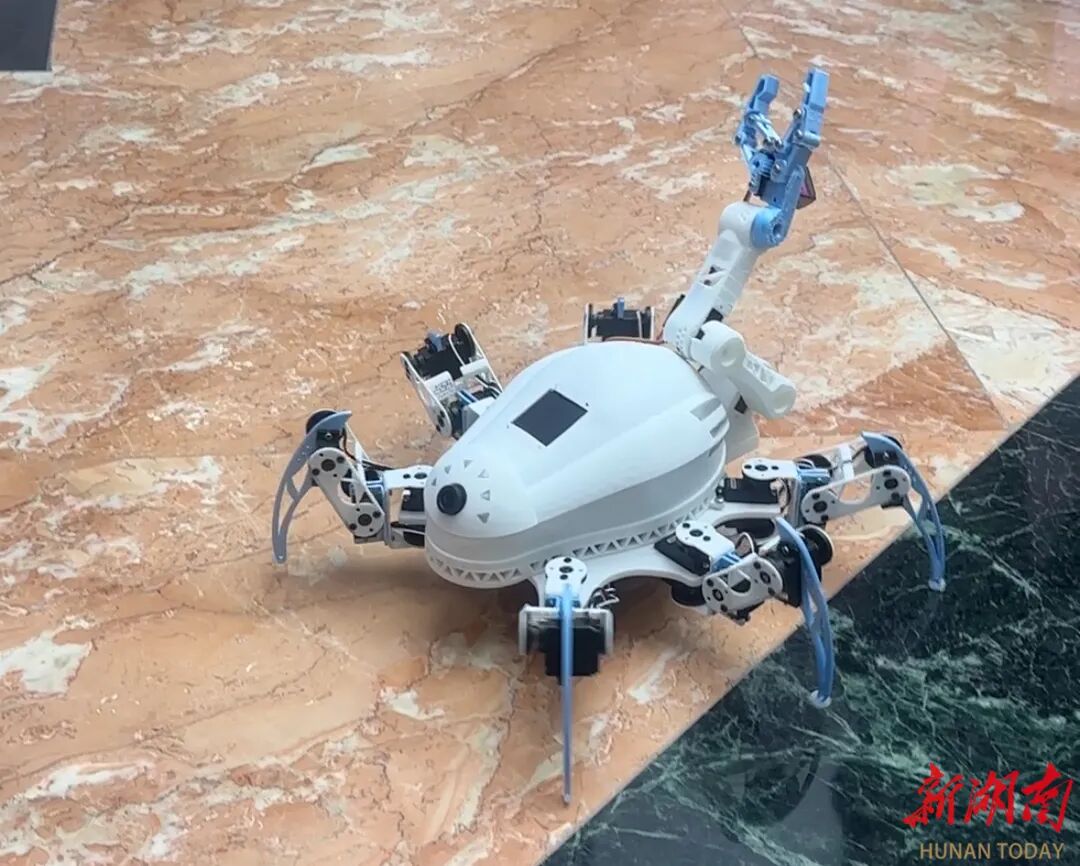
First-year student Zhang Ran and his team designed a hexapod pet robot named "Qi Dian," which stood out among many robots and won the "Technology Innovation Award." Not only can it move flexibly via handle operations and grasp objects with its robotic arms, but its eyes can also recognize the owner. It can change the color of its lights in different states, and even converse with people relying on a built-in large-model voice module.
"We got an insight into the desire for emotional connection among today's youth, which inspired us to create this warm AI pet," Zhang Ran said. He mentioned that he once participated in a robotics competition with predefined tasks in high school. This time, however, the tasks began with identifying needs and defining the product by ourselves. "This requires us to shift our mindset from "as an engineer" to "as a product manager," to ensure that the technical approaches always serve users."
Failures are allowed in "Ultra-early Incubation."
In addition to the coursework, a number of student-led entrepreneurial projects are also showcased, including an autonomous inspection drone adaptive to complex mine tunnels, navigation glasses that provide guidance through bone conduction, and a low-cost drone for aerial surveying service...
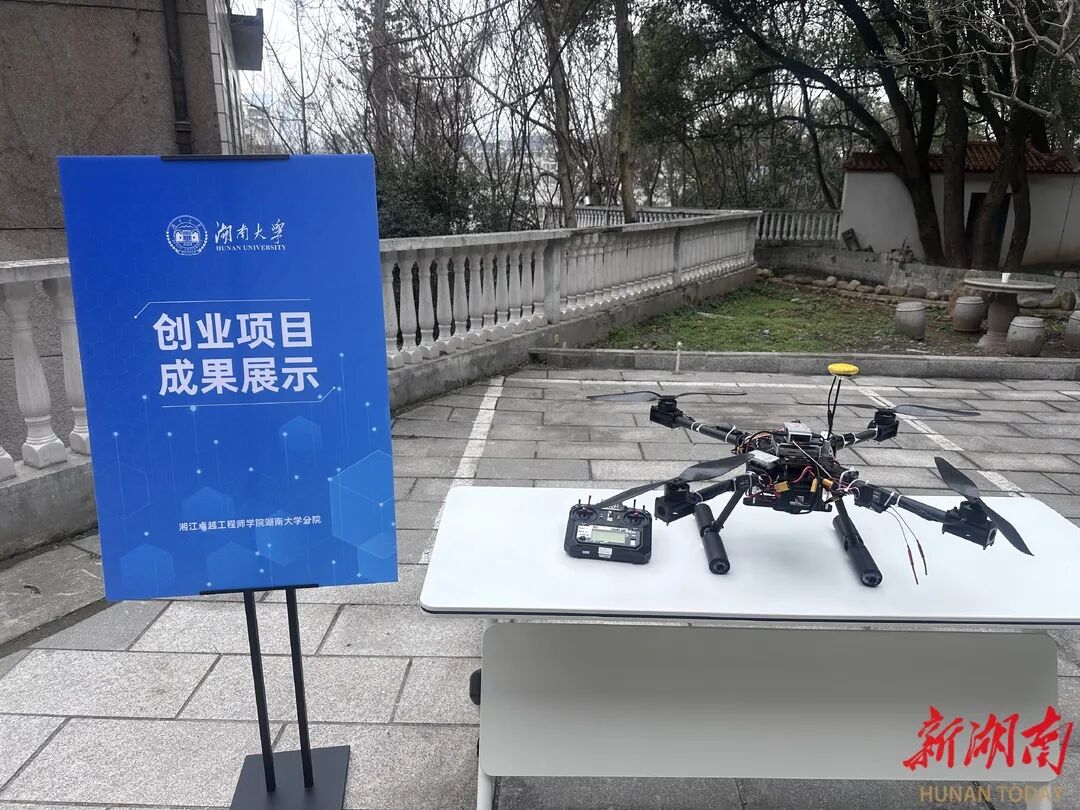
"The college established a special fund to provide ample financial support for student teams with promising ideas, through an application and proposal review process,"Qin Yunchuan explained."We call this'ultra-early incubation.'"
"It doesn't matter even if a project ultimately fails. This exploration process, where trial and error are allowed, is a crucial part of talent cultivation,"Qin said. The college looks forward to planting the seeds of innovation and entrepreneurship in students' hearts via this "ultra-early" cultivation, nurturing future-oriented elite engineers who possess a product mindset and a pioneering spirit.